A Thermos, Two Stops, and Tea Between Them
Choose a tea-and-container routine that fits the day: brew at home, pack a concentrate, or carry hot water and steep later.
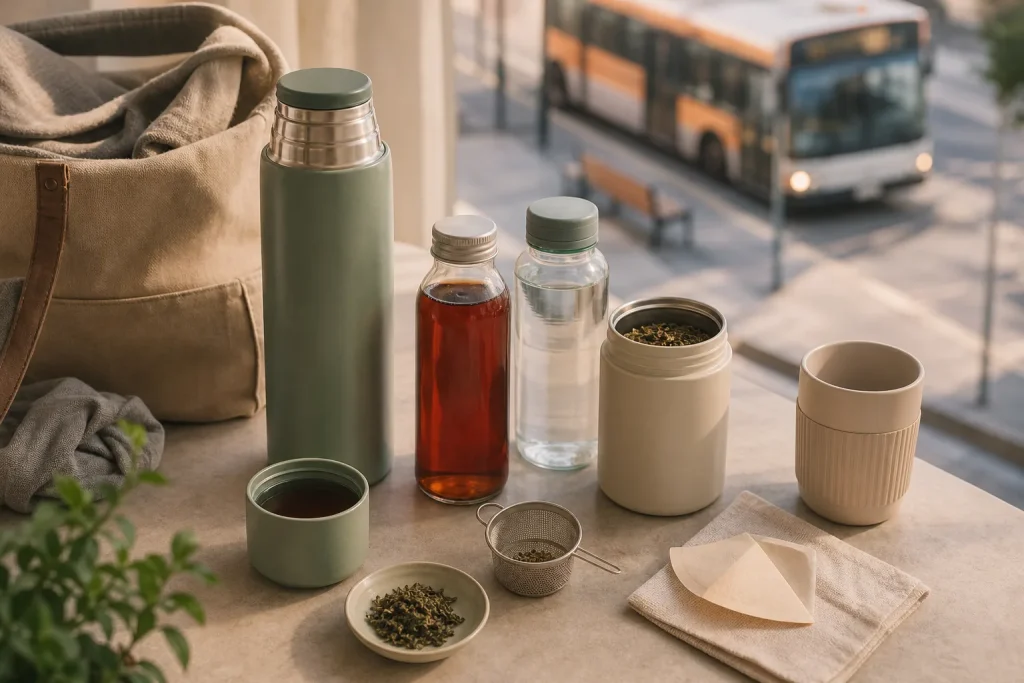
You lock the front door, remember the appointment across town, then notice the thermos waiting on the counter. The tea inside can be a small comfort between errands, but the routine depends on how long it will sit, where you can pause, and whether you want one prepared cup or a fresh steep along the way.
There are three useful approaches: brew tea at home and carry it ready to drink, pack a concentrate to dilute later, or bring hot water and steep at a stop. Each balances convenience, flavor control, and equipment differently. Start by considering when you expect to drink it, then choose the method that makes that moment easy.
What should you decide before you pack?
Think about the route rather than an idealized day. A thermos that stays in a bag between a bus ride and a walk should be leak-resistant and easy to open without a table. If you will have access to a kettle or hot-water tap, carrying tea separately may be simpler than keeping a drink hot.
Next, consider the tea itself. A strong black tea can remain flavorful as it cools, while delicate green tea may become dull or overly sharp if its leaves keep infusing in hot water. Herbal blends vary, too: ginger or mint infusions often travel easily, while finely cut blends can leave sediment unless filtered well.
Finally, be realistic about cleanup. If you dislike rinsing a tea strainer in a public sink, prepare and strain the drink at home. If you enjoy making tea during a pause, carry leaves in a small container and use a removable basket or paper filter that you can take away with you.
When is ready-to-drink tea the easiest choice?
Brewing at home works well when the day has a clear departure time and you want the fewest decisions on the road. Brew the tea in a pot or mug, remove the leaves once the infusion tastes right, then pour it into a clean thermos. Removing the leaves matters: heat held in an insulated bottle can continue extracting flavor, making some teas increasingly bitter or astringent.
Use water suited to the tea and follow your usual brewing routine rather than making the drink unusually strong. A thermos slows cooling, so a tea that tastes balanced at home should remain pleasant as it cools. For a more forgiving result, choose a familiar black tea, roasted oolong, or herbal infusion, and keep milk separate until serving if you are unsure how it will hold.
Before filling the bottle, warm it with hot tap water or a little hot water from the kettle, then empty it. This helps avoid pouring freshly brewed tea into a cold vessel. Check that the lid seals properly, wipe the rim, and place the thermos upright in a bag pocket or snug carrier.
This approach suits a day with back-to-back stops, a commute, or an outdoor walk where you may not find hot water. It is less appealing if you want a delicate tea at its freshest or expect to leave the drink sitting longer than you enjoy it. In that case, a later steep or concentrate gives you more control over the timing.
Could a concentrate make the middle of the day simpler?
A concentrate is tea brewed stronger than you would normally drink, then diluted with hot or cool water shortly before serving. It can be a useful middle ground: prepare the flavor at home, but avoid carrying a full thermos of ready-to-drink tea. Pack it in a clean, tightly sealed, food-safe bottle and carry plain water separately.
Keep the concentrate only as strong as needed for the dilution you expect. Try a small cup at home, dilute it with water, and adjust the next batch if the tea tastes thin or too intense. This is a matter of taste, not a formula. For a hot drink, use fresh hot water at your stop; for a cool one, use chilled water and a cup that can hold the combined drink.
Say you have an afternoon appointment and expect a quiet break at a café where you can ask for hot water. You could pack a small bottle of strong Assam tea and a separate travel cup, then dilute the concentrate at the stop until it tastes comfortable. The result is a freshly combined cup without carrying a full thermos; if access to hot water is uncertain, ready-to-drink tea is the simpler choice.
Concentrate is not worth the effort if it means carrying extra containers you will resent handling. For a drink you plan to carry between stops, prepare plain tea concentrate, chill it promptly in a refrigerator, and transport it in an insulated cooler bag with a cold pack. Keep it cold until you are ready to dilute and drink it; do not leave it sitting warm for an extended or uncertain stretch. If you cannot keep it cold, choose ready-to-drink tea in a clean thermos or prepare fresh tea at your stop instead. Do not add milk or other perishable ingredients to the concentrate before travel.
When does steeping at a stop suit you?
Carrying hot water and tea separately gives you fresh control, especially for green, white, or lightly oxidized teas. You can use a small insulated flask for hot water, a tin or pouch for leaves, and a basket infuser or paper filter. At your stop, pour water over the leaves, steep for the time you prefer, remove the infuser, and serve.
This option suits someone who expects a calm pause and has a clean surface to work on. It is also handy when the route includes a place with a kettle, since you can leave the hot-water flask at home. But it is less convenient on a crowded platform or outdoors in wind; opening packets and managing loose leaves can become a nuisance rather than a ritual.
For a simple setup, portion the leaves at home into a small lidded container. Keep the infuser dry in a separate pouch, and carry a cup with enough room to remove it without splashing. If you use a paper filter, pack another one and a small bag for the used filter and leaves, so you do not have to leave scraps behind.
Temperature matters for taste, but you do not need elaborate gear. If the tea is sensitive to very hot water, let boiled water cool briefly before pouring, or use a flask filled with water at a temperature you already know works for that tea. Avoid carrying an uncovered cup or handling very hot water while moving; make the drink only once you are safely settled.
How should you pack and serve the tea?
Choose a container that matches the way you will drink. A narrow-mouth thermos helps limit spills, while a wider opening can be easier to clean and pleasant for sipping. A separate cup makes sharing or cooling easier, but adds another item to carry. Check the lid and gasket for tea residue before packing, since old scent can linger and affect a mild infusion.
Keep the outside of the thermos dry and pack it upright, apart from papers, electronics, and anything that should stay dry. A cloth sleeve or small pouch can catch condensation and protect the bottle from scuffs. For leaves, use an airtight tin or resealable pouch, then place it somewhere it will not be crushed or mixed with strongly scented food.
Think through serving before you leave. If you will drink straight from the thermos, rinse the rim and avoid adding milk or sweetener that could be difficult to wash out later. If you prefer a cup, bring one stable enough to set down and large enough for the drink. A small spoon can help with honey or sugar, but pre-sweetening at home is simpler if the sweetener dissolves fully.
When you reach a stop, set the bottle down before opening it, loosen the lid carefully, and pour away from bags or clothing. If the tea is hotter than you want, pour a small amount into a clean cup and let it cool there; avoid leaving the thermos open between stops. For concentrate, follow the cold-storage plan: if it has warmed during travel or you are unsure how long it has been unrefrigerated, do not rely on it; choose a fresh drink instead. Empty the leaves and rinse the vessel when practical, then wash it with dish soap when you can.
Which approach fits your day?
Choose ready-to-drink tea when your schedule is full, hot water is uncertain, and ease matters more than a freshly steeped cup. Choose concentrate when you can keep it cold and pause somewhere to dilute it. Choose hot water and separate leaves when the pause itself is part of the pleasure and you have room to brew without rushing.
If the day is unpredictable, favor the option with the fewest dependencies. A ready-filled thermos needs no café, kettle, or clean counter. If you know a good stop is built into the route, concentrate or a small steeping kit can make that break feel more deliberate.
The most useful routine is the one that still feels manageable at the second stop, when your hands are full and the day has changed shape. Before leaving, check the seal, decide where used leaves or filters will go, and pack only the equipment you expect to use. Then the tea can remain a welcome pause instead of another task to carry.