The Cup That Cools Beside the Window
A cup’s shape, material, and place on the table can affect how a hot drink cools, though no single vessel behaves the same in every kitchen. A few comfortable choices can make the wait feel less like a chore.
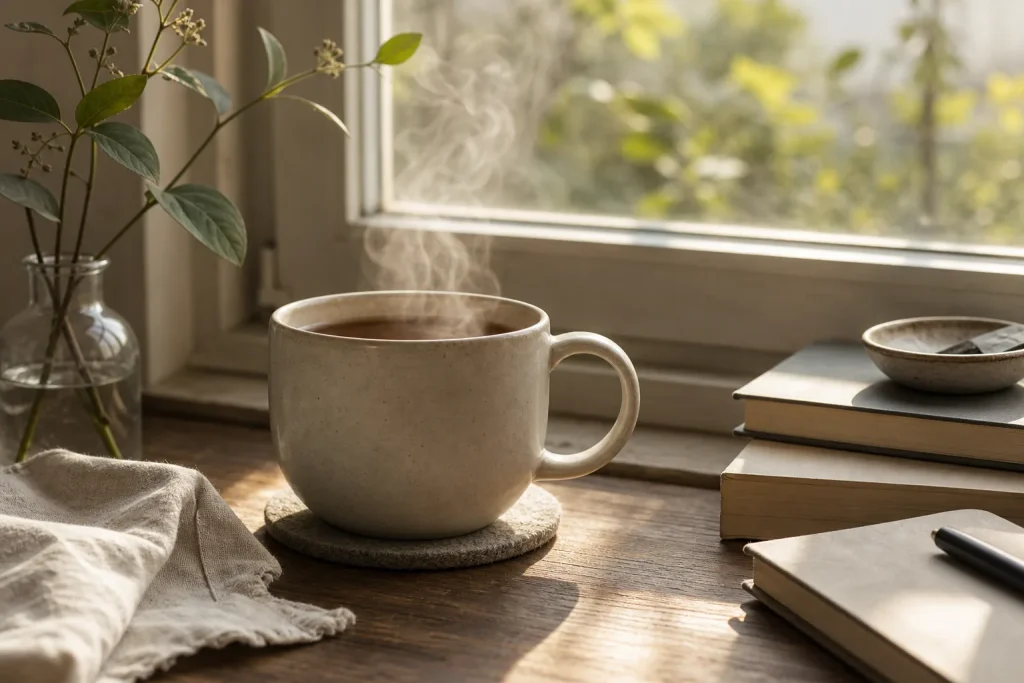
The mug is still too hot to lift comfortably, so you set it on the sill and watch the steam thin against the window. A few minutes later, the first sip feels easier, and the room has had time to enter the break. Serving a drink is not only about keeping it hot; the cup and the wait can shape how you meet it.
What does the cup invite you to do?
A broad ceramic mug exposes more of the drink’s surface than a narrow, deep one when their fill levels are similar. That can let heat escape more readily, though the result also depends on the mug’s thickness, the amount of drink, and the room. A wide rim can make aroma easier to notice, and the visible surface may encourage you to take a cautious sip.
A tall, narrow cup may hold warmth longer than a broad cup if the vessels have similar thickness and contain the same amount of drink. A thick ceramic wall can also change how quickly the cup itself warms or cools. These are tendencies, not dependable rules: a large drink in a thin narrow cup may cool differently from a small drink in a thick broad mug.
Handle shape matters in an ordinary way. A roomy handle lets you hold the cup without wrapping your fingers around hot sides; a handleless bowl asks you to wait until the outside feels comfortable. Neither is inherently better. Choose the form that fits the break you mean to have, not just the one that looks right on a shelf.
How does material change the wait?
Ceramic comes in many weights and wall thicknesses, so it does not have one predictable cooling effect. A thin-walled cup may behave differently from a thick, heavy mug, and the drink’s volume and starting warmth matter too. If a drink tends to stay too hot for your taste, trying a lighter vessel is a simple adjustment before changing your brewing routine.
Glass makes the cooling visible. Steam fades, the surface settles, and the color of tea or coffee becomes easier to read as the cup stands. Glass thickness and shape can affect how the cup behaves, so treat appearance as a cue rather than a promise. Use glass made for hot drinks, and hold it by a safe, comfortable grip.
Metal cups can feel cool to the touch even while the drink inside is hot, so the outside is not a reliable guide to the first sip. Metal vessels vary in construction, and their surface may feel different in the mouth than ceramic or glass. If that sensation bothers you, reserve metal for travel and use a cup whose material feels pleasant at home.
Where should the cup rest?
A windowsill offers a little distance from the kettle, keyboard, or kitchen counter, but sunlight can warm the cup again. A shaded sill or small table nearby gives the drink room to cool without turning the pause into a balancing act. Put down a coaster if condensation or a damp ring could mark the surface.
Air movement and room temperature affect how quickly a drink cools, but there is no need to chase a precise setting. Keep the cup away from an open draft if you want warmth to last; move it to a cooler spot if the first sips are uncomfortable. A safe, stable surface matters more than finding an ideal cooling location.
Notice the surroundings, too. A cup beside a closed notebook can signal a short break; one placed near a chair and a book invites a slower one. The setting does not need decorating. Clear enough space to set the cup down, and let that be the small boundary between the drink and whatever comes next.
What is worth adjusting?
Start with one choice at a time: a thinner cup, a wider opening, or a different resting place. If the change makes the drink comfortable sooner, keep it. If it merely adds fuss, return to the cup you already like. Cooling is a matter of comfort, not a project that needs equipment or a timer.
It is not worth stirring repeatedly, pouring the drink between several vessels, or rearranging the room to control every degree. Those actions can make a quiet break feel like a task. A single gentle stir may help distribute heat through the drink, but after that, waiting is usually enough.
Say you make black tea in a thick, deep mug and find the first sip too hot. Imagine that, on another day, you pour the same amount of tea at the same starting warmth into a lighter, wider ceramic cup and set it on a shaded table near the window. The observable result to look for is whether the surface gives off steam more freely and the tea reaches your preferred sipping comfort sooner; if it cools too quickly, return to the deeper mug. Because cup shape, thickness, fill level, and room conditions all matter, the comparison helps you decide what suits your own break without implying that the wider cup always cools faster.
When is the drink ready?
Let your senses decide. Steam that no longer rises in a dense plume, a rim that feels comfortable near your lips, and a small cautious sip are useful cues, not fixed measures. A sip also tells you whether the flavors have opened up or whether the drink has become cooler than you enjoy.
There is no obligation to drink every cup at its hottest. Coffee can become easier to taste as it cools, while some teas feel gentler when their heat settles. If the drink has cooled past your preference, warm it again only in a vessel intended for that use, and take care when handling it.
The cup by the window can remain a small, ordinary choice: a lighter mug for a quick pause, a deeper one for a longer sit, a shaded place to rest it between sips. Vessel details and room conditions affect the wait, so let comfort—not a supposed rule about cup shape—guide the next choice.