Black Tea Leaves After the Tin Has Been Open a While
An opened tin of black tea may still make a pleasant cup, even if its fragrance has softened. Check how it was stored, inspect the dry leaves, and brew a small sample when they appear clean and dry.
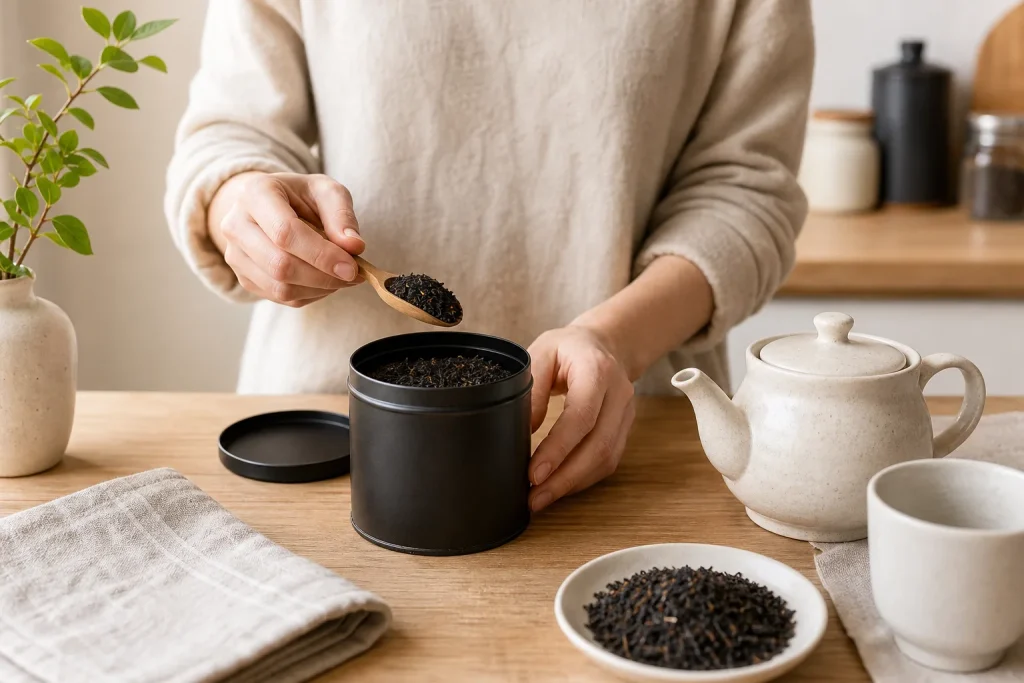
You reach for the black tea tin on a quiet morning and notice that its familiar scent is faint when you lift the lid. The leaves look dry, but the cup you have in mind is a fragrant one. Check the tin and its surroundings first; a faint aroma alone is different from signs that the tea has become damp or contaminated.
What should you check before brewing?
Black tea is dry, but it can take on moisture and odors from its surroundings. Its aroma can also fade when the leaves are exposed to air, heat, light, or repeated handling. Storage will not restore lost fragrance, but it can help you understand what may have changed.
Look at the container. A clean, dry tin with a close-fitting lid is useful if it has stayed in a cupboard away from the stove, sink, and sunny window. A decorative tin with a loose lid may offer less protection from warm air and kitchen smells.
Check the leaves and container for condensation, dampness, visible mold, or evidence of a spill. If you see mold or suspect liquid reached the tea, do not taste it or try to rescue it by brewing. Discard the leaves, then clean and thoroughly dry the container before reusing it.
Consider nearby odors, too. Tea can pick up aromas from strongly scented foods and household products, so a tin beside spices, coffee, or cleaning supplies may no longer smell like itself. If the leaves have a clear, unwanted odor but remain dry and show no visible contamination, that points to a quality problem: they may not make a pleasant plain cup. If the odor is musty or damp, or you cannot tell whether the leaves were exposed to moisture, do not taste them; discard them as a cautious choice.
How should you store tea that is still dry?
If the leaves look clean and dry and the container is unsuitable, transfer them to an opaque, airtight tin or jar with a clean, dry lid. A container that fits the amount on hand leaves less unused space than a much larger jar. If the current tin closes well and stays in a suitable cupboard, there is no need to move the tea.
Keep it in a cool, dry cupboard away from direct sunlight, steam, and heat. Avoid storing it above a kettle or near an oven. A refrigerator is usually an awkward place for dry tea: opening a cold container in a warm room can invite condensation, and nearby foods may lend their aromas.
Use a dry spoon, or pour the leaves into a dry measure. Return a damp spoon and you introduce moisture; scoop over a steaming mug and warm, wet air can reach the leaves. Close the lid promptly after taking what you need.
It is not worth buying a special gadget or repeatedly moving the tea between containers. A clean container that closes well, kept away from moisture, heat, light, and strong odors, is enough for ordinary home storage.
What can the dry leaves tell you?
Take a small amount out and smell it without putting your nose into the tin. Black tea may smell malty, woody, fruity, floral, or gently smoky, depending on the tea. You do not need to name every note; notice whether the scent is clean and appealing, muted, or distinctly unpleasant.
A faint smell by itself does not mean the leaves are unsafe. It may mean they have lost some fragrance. A musty or damp smell is more concerning, particularly if you also see moisture or mold. Since smell alone cannot establish exactly what caused an odor, avoid tasting tea with a musty or damp smell and discard it rather than trying to judge it by a sip.
Ordinary variation in leaf shape, color, and size is not a problem, and broken leaves do not automatically mean the tea is spoiled. Look instead for dampness, visible contamination, or an unwanted odor. Dry tea can change subtly in appearance, so color alone is not a reliable guide to the brewed flavor.
How do you brew a useful sample?
If the leaves appear clean and dry and smell neutral or pleasant, brew a small sample using your usual method. Familiar water, measure, and steeping approach make it easier to judge the tea itself. If the package gives brewing directions, you can follow them; otherwise, use the amount and approach you would choose for a simple cup.
Do not leave the leaves in water for a very long time to compensate for a quiet aroma. A longer steep may bring out more bitterness or astringency without restoring faded fragrance. Smell the brewed tea, then taste it only if the dry leaves raised no concern about dampness or contamination.
Ask practical questions: Is the flavor clean? Does it have enough body for the way you want to drink it? Is the aroma pleasant, or does an unwanted note remain? The cup need not match your memory exactly to be enjoyable.
Say you want a bright, aromatic cup to drink plain, but the tin now has only a soft, neutral scent. The leaves look dry, with no mustiness or visible contamination. You brew a small mug using your usual method and find that it tastes clean but subdued. You might keep it for milky breakfast tea and choose a more aromatic tea for the plain cup.
What if the sample tastes different?
A clean-tasting tea that seems flat may have lost some aromatic character. If it remains pleasant, the choice is about quality and preference: keep it for a less aroma-dependent drink, or let it go if you no longer enjoy it.
If it tastes unexpectedly bitter, consider the brewing method before blaming the leaves. Water that is hotter than you prefer, a heavy measure, or a long steep can make black tea feel harsh. If the leaves were clean and dry, brew another small cup with your usual adjustments, changing one part of the method at a time. If the unpleasant taste remains, there is no need to finish the tin.
A mellow or less fragrant leaf may work in milk tea if its flavor comes through comfortably, while the same tea may disappoint in a delicate plain cup. Match the tea to the drink you want rather than expecting every tin to produce the same result.
Blending is a choice, not a repair. You could combine a quiet tea with a fresh one if both smell clean and their flavors make sense together, but mixing cannot remove an off odor or address suspected contamination. Do not blend tea that is damp, musty, moldy, or otherwise questionable.
When is discarding the cautious choice?
Discard tea that is visibly moldy, damp, contaminated by a spill, or musty or damp-smelling. The odor may have several causes, and smell alone cannot tell you which one applies. Avoid tasting it to find out. If you cannot tell whether the leaves have been exposed to moisture or contamination, discard them rather than taking a chance.
A loss of aroma alone is different from evidence of contamination. Dry, clean tea that simply tastes bland may still be suitable to brew, though it may not be worth keeping for the drink you prefer. The decision can rest on whether you enjoy the cup.
There is little value in sniffing the tin repeatedly, searching for a precise age cutoff, or adding extra leaves in hopes of recreating the original aroma. Those efforts cannot reverse changes caused by poor storage. If the tea appears clean and dry, a small sample brew can help you decide whether its flavor still suits you.
How can you make the next tin easier to judge?
When you open a new tin, note its basic character in a few words, such as “malty and strong” or “light, floral, and good plain.” That gives you a point of comparison later without requiring a tasting notebook or an elaborate system.
Keep the package information if it helps you identify the tea. If you tend to lose track, write the opening date on a removable label and treat it as a reminder to check the leaves, not as a promise about their flavor. Storage conditions and your preferences matter more than a date alone.
When the tin is nearly empty, consider whether its size suits how often you drink that tea. If you use it slowly, a smaller package may be easier to finish while its aroma is still appealing. You can also keep a frequently used tea in its own well-sealed container rather than opening several tins and exposing each to kitchen air.
Next time a familiar tin smells quieter, inspect the container and leaves before deciding what to do. If they are clean and dry with no concerning odor, a small brew can show whether the tea still suits your cup. If you notice dampness, mold, a musty smell, or possible contamination, skip the taste and discard it.